
From the Pages of THE TON #4
I first met Kenneth “Bobcat” Wright (Kenny) on a motorcycle run. I had, of course, heard stories about the mad scientist from Germany and had even seen his bikes at shows. But until then I had yet to meet him. Lots of memories are a bit foggy from that night, but I do clearly remember his charm, intelligence, and positive outlook as everyone partied early into the morning – or late into the night depending on how you look at it. As the party was about to reach its peak Kenny exclaims, “My nipples are like fucking dynamite!”; the lasting memory before the party faded and people crashed.
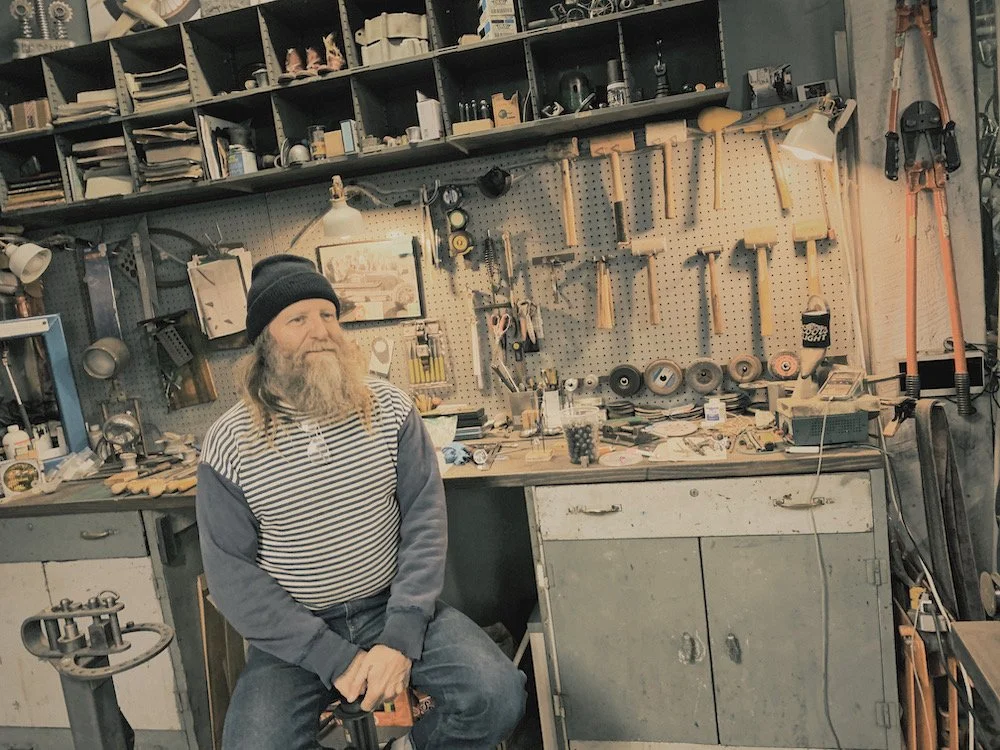
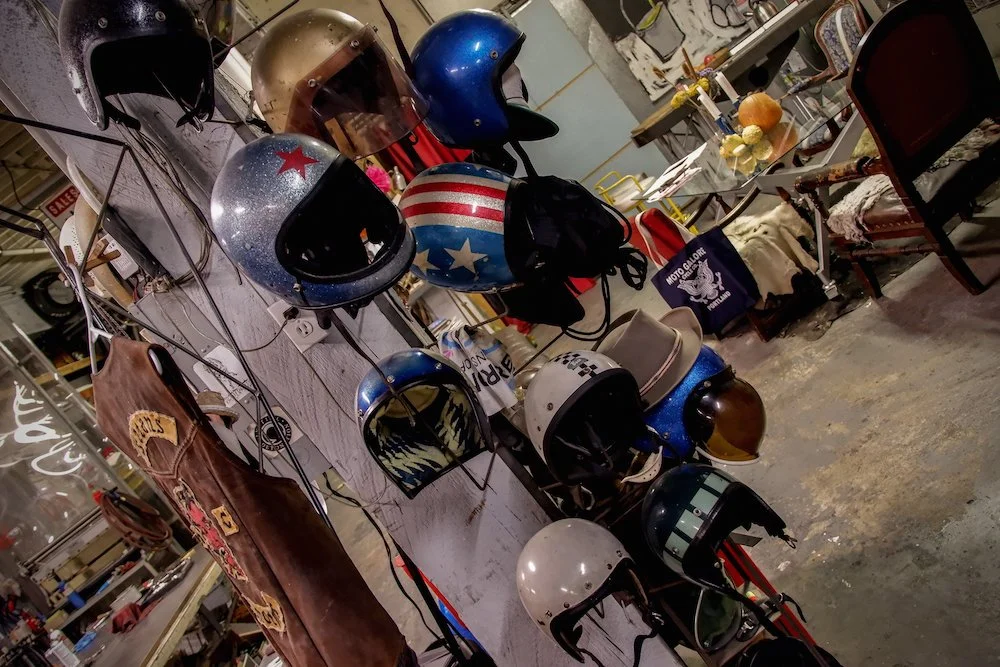
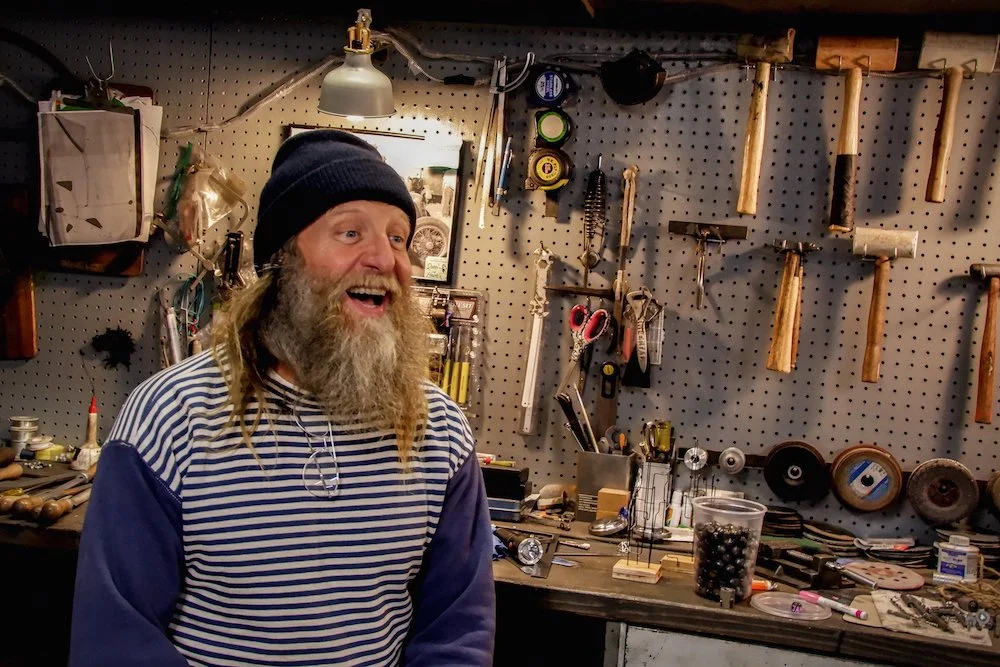
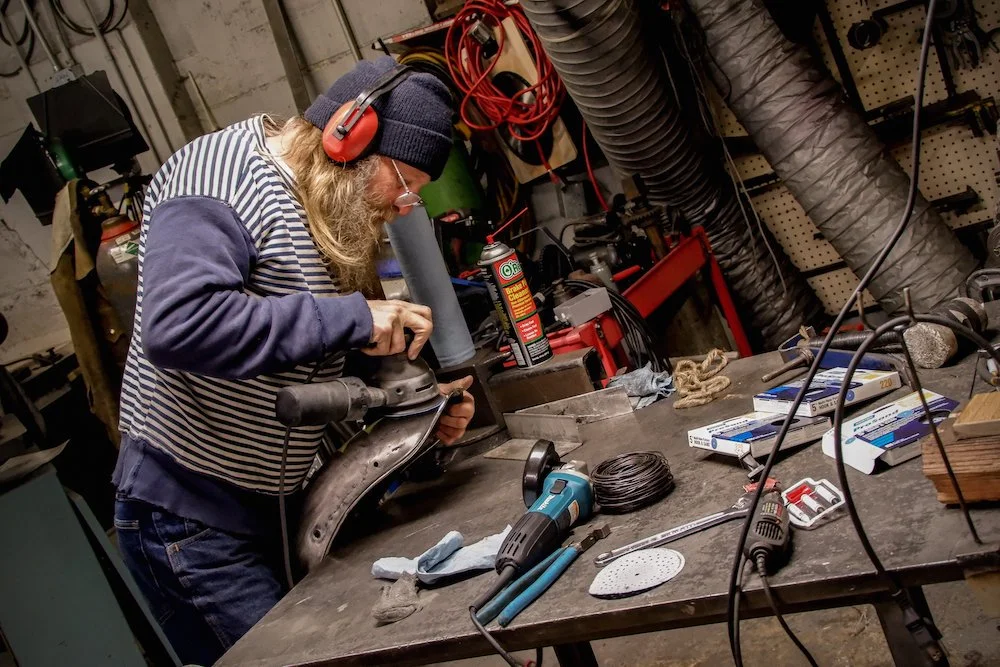
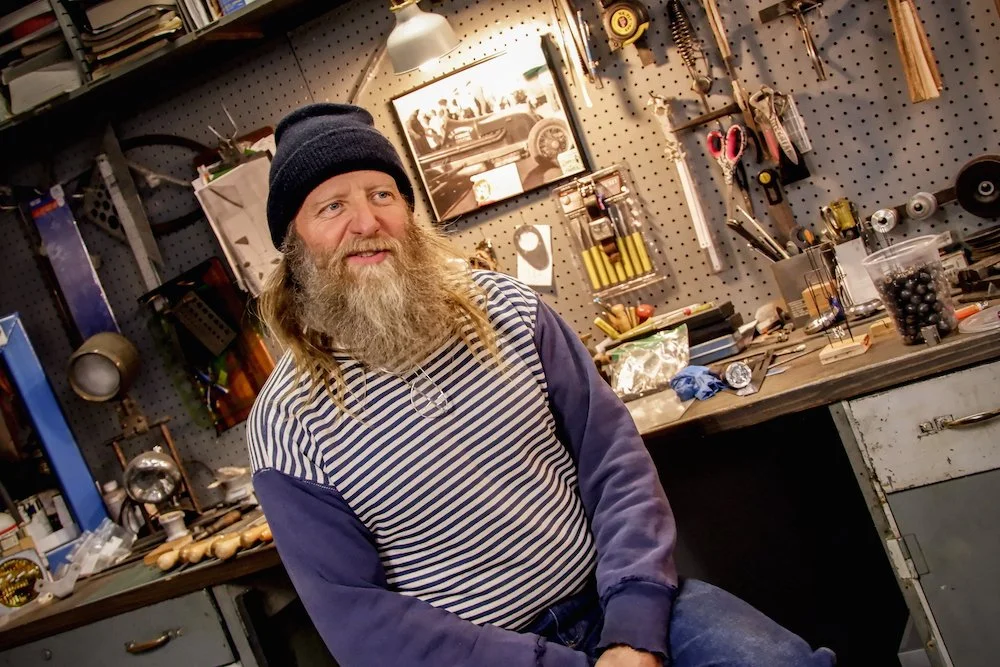
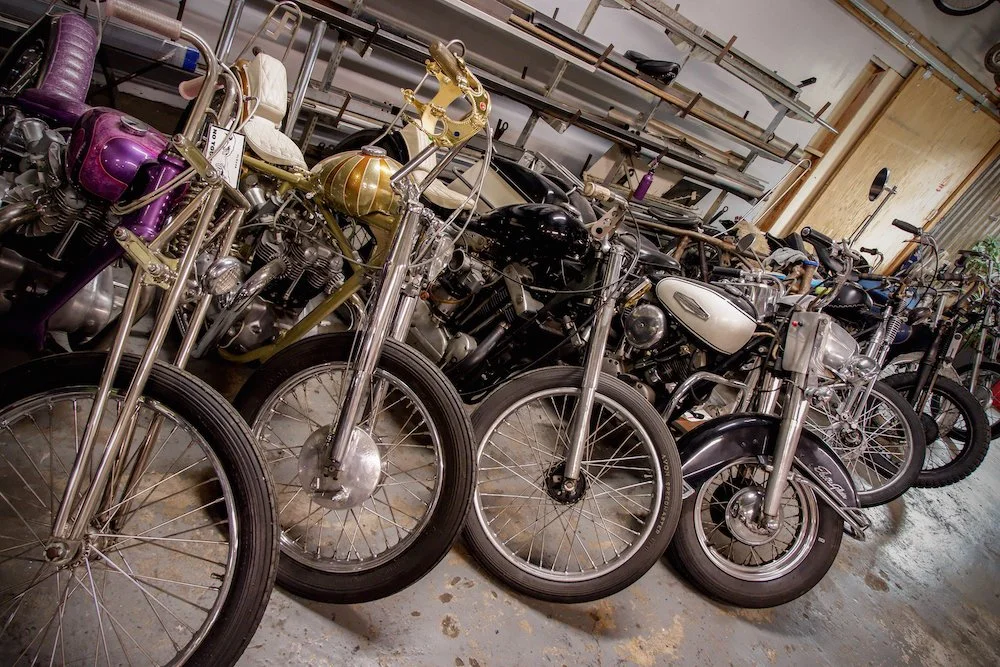
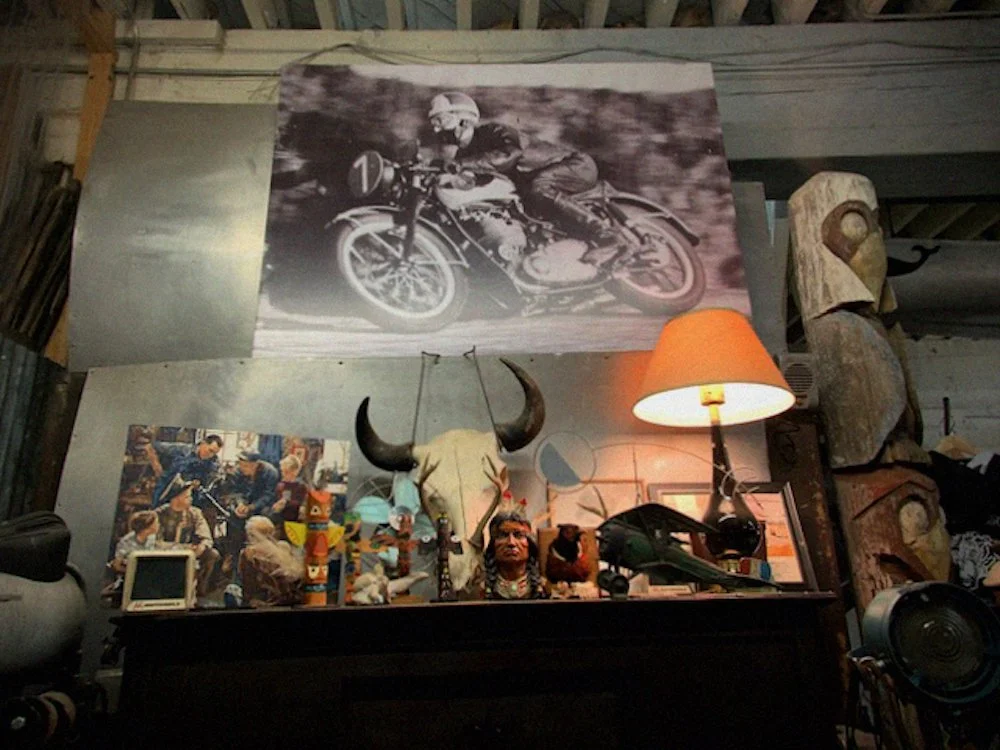
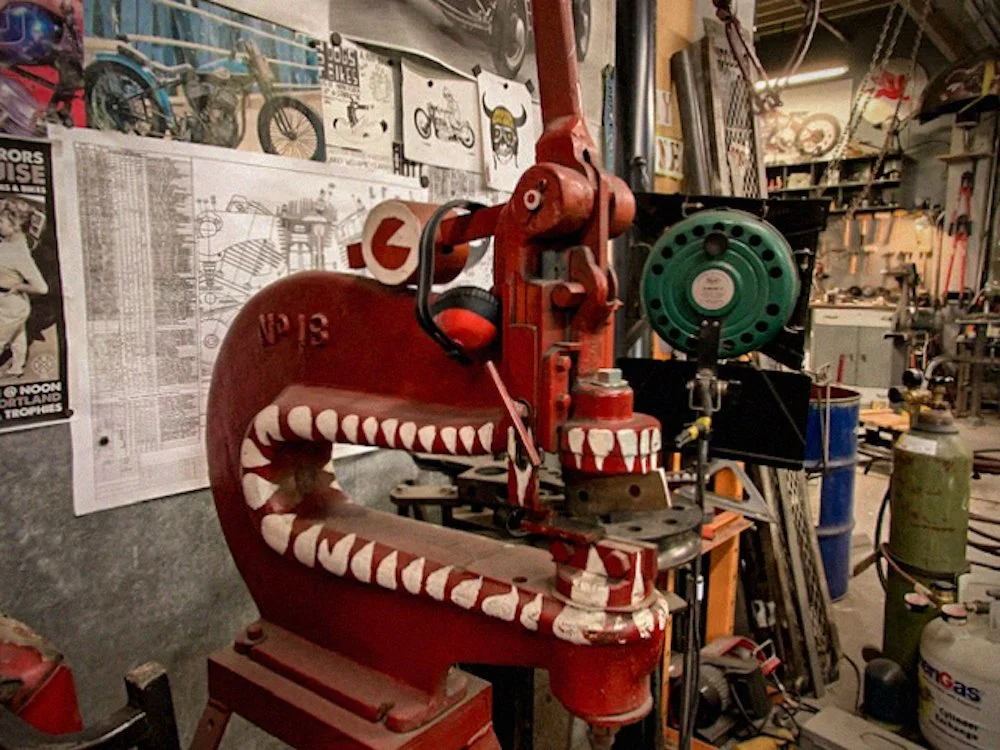
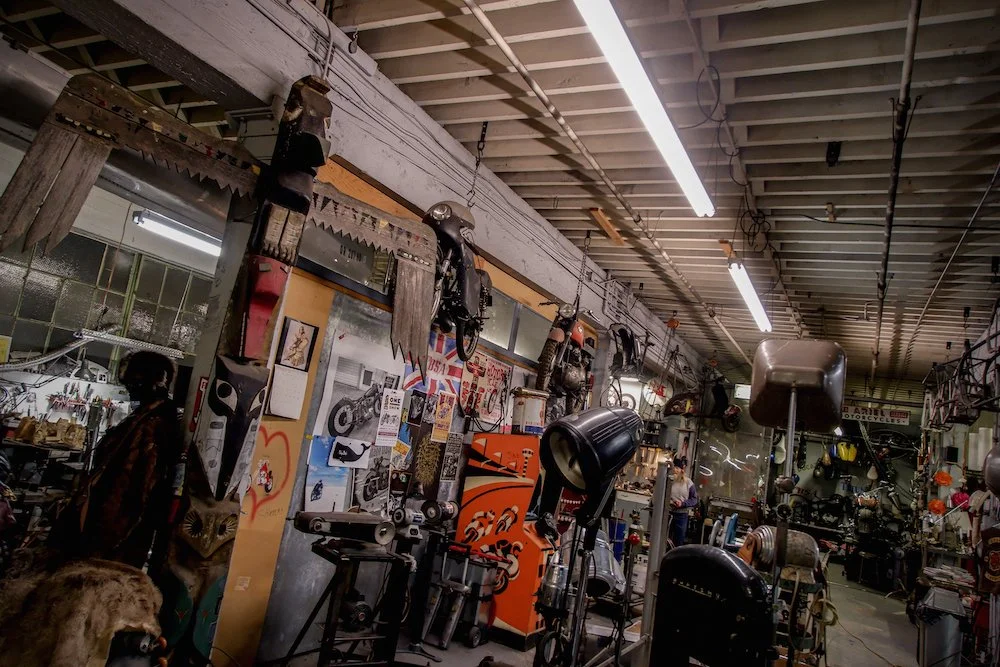
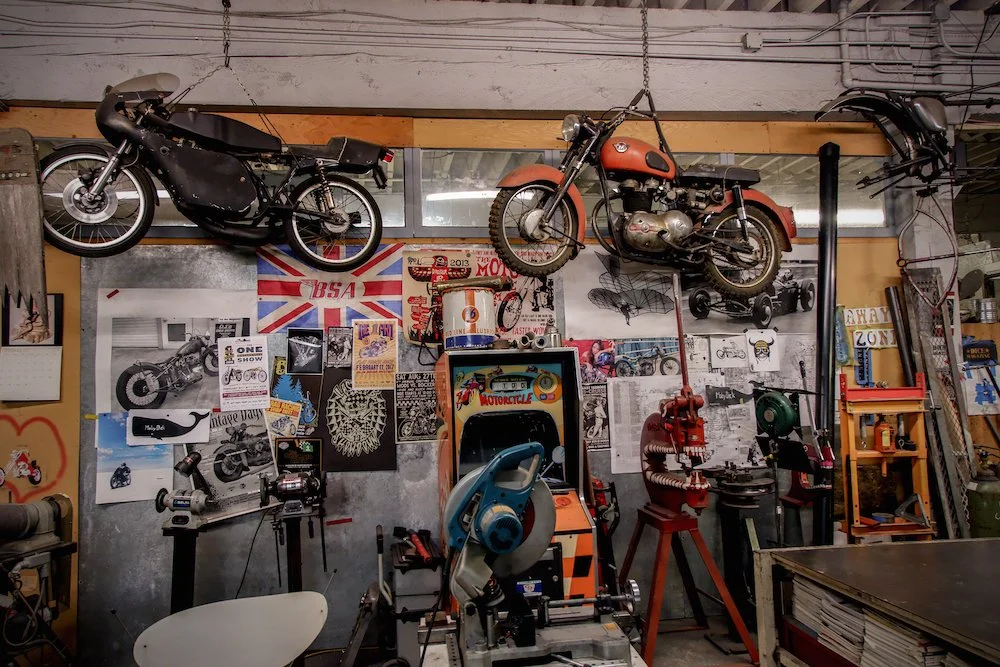
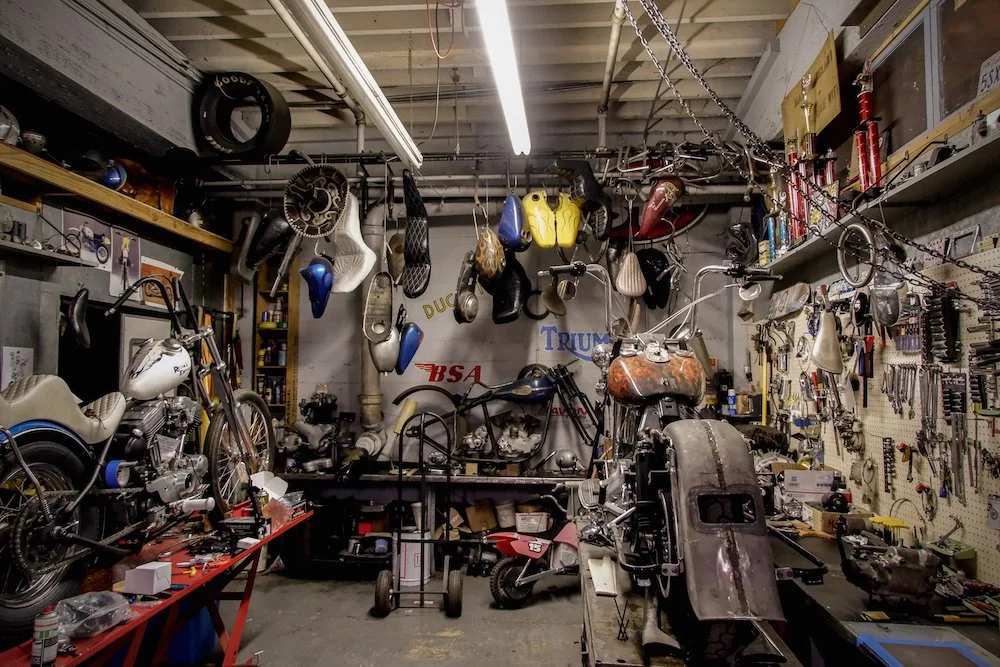
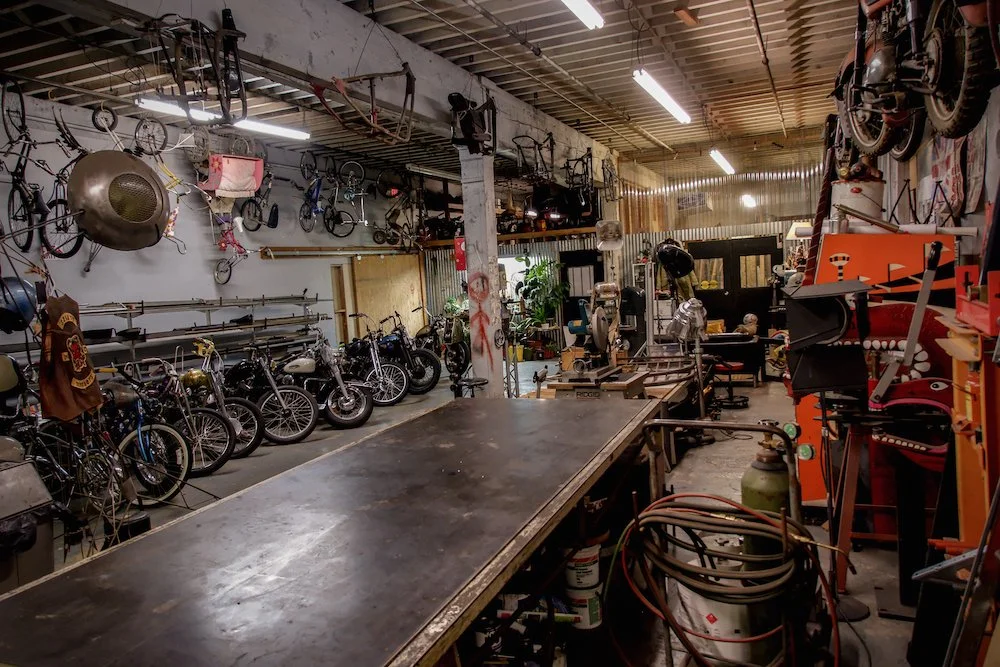
Wright is well known globally as the person behind MotoGalore. But in Portland, Ore., he has become a local legend for his positivity, lust for life, and community minded approach to nearly everything he does. For the past decade and a half, his work has left an indelible mark in the Portland motorcycle community.
Born in mid-60s Germany, Wright would move to the states and eventually settle in Portland, where he has done everything from making fine art, to fabricating the bar railings at the legendary La Luna club, and working with a small start-up animation company Laika Studios.
While making a name for himself as a metal fabricator and artist, Wright began to chase his obsession building motorcycles. “From my earliest memories of a little boy the age of six riding on the tank of a member of a local biker gang’s motorcycle in Munich Bavaria,” says Wright, “to the longing for riding anything motorized with two wheels, I have been obsessed.” Whether that translated to mopeds or garage-built bicycles with found engines, Wright has followed his obsession through nearly every kind of motorcycle imagined. “I always wanted to ride,” says Wright, “I couldn’t even go to my apprenticeship without taking a detour!”
“In my teens I would ride on a large frozen community swimming pool,” explains Wright, “or I would practice trail riding on ridiculously under powered 50cc German/Italian made 2-stroke engines. I was always in trouble with the law for not obeying the traffic and safety regulations.”
“Around my fortieth birthday,” explains Wright, “I had not been riding motorcycles for eight years while I was focusing on my career in fine arts and special effects. During this time something happened and I got super upset that I didn’t have a motorcycle.” It was then Wright made the decision to get a motorcycle again, picking up a 1964 BSA through a friend named Mitch.
“The bike didn’t run, so I decided to make the bike how I wanted. That A-50 brought me back to a time when I was really invested in motorcycles,” says Wright, “I had a cousin who had an early Motoguzzi.” Wright would ride his family’s bikes around his uncles farm in Bavaria, “I just had a real deeply invested love for gasoline burning machinery. I love the smell.”
During the time that Wright rediscovered his passion for motorcycles, across the street from his shop Casey Henderson was restoring cars and riding bikes. “I offered him a spot in my studio,” says Wright. “After a few years I just said ‘I love these glorious machines’, and I just threw out the name MotoGalore. And it became a thing there for a moment.” From that point Wright, Henderson, and a small group of friends began to rack up attention from shows and taking the awards to match.
“Our motto was, things that are pretty don’t need to be shiny,” explains Wright, “Our thing was rough bikes, spray can paint jobs, garage-built works.” MotoGalore eventually caught the eye of Japanese bike culture creating a dialog of what was going on through the use of early social media (Myspace). “During this time, it was the early stages of the [current] Portland motorcycle scene, it was a lot of fun, with a lot of old timers left,” says Wright.
“I do think there is a community out there that supports each other,” says Wright, “Maybe it was dudes who were older being compassionate and helpful. Like Jim Skinner who was doing flat track racing or the Sandy Bandit, who was a pain in the ass, but a super rad guy when it comes to knowledge. He [had this] super arrogant mind which I held so dear. I ended up inheriting a bunch of stuff from him.”
Wright thrived on this supportive community, in the early days of MotoGalore Wright and his group of like-minded cohorts collected mostly British bikes and parts. This eventually shifted to focusing on custom Harley Davidson bikes. “I had a lot of early support from Rudy Capella in my start in the custom circuit,” says Wright, “I had support from a bunch of the 1% guys. It was all just warm, kind, and beautiful. It was a little more edgy because it was less popular.”
Wrights custom bike work would eventually bring him international attention because of his histrionic informed artist’s eye for detail. “Whether one is influenced by art or pop culture… for me it’s probably the art in handcrafted and small low-tech manufacturing, searching to find a personal touch in a vast glamorous bike culture,” says Wright, “I have been influenced by everything I have seen and everyone I have shared space and work with.”
“I’ve been working with metal since I was 13 years old,” says Wright, “and I will be fifty-five this year. So, I’ve been doing metal for a long time.” While his work more recently has been with motorcycles, Wrights career in Portland has included a number of areas such as fine arts, robotics, kinetic arts, and more. His art is in Portland’s Oregon Museum of Science and Industry’s permanent collection, as well as in the collections of patrons like Nike CEO Mark Parker.
“Everything I have done has been a collaboration,” explains Wright, “Whether it’s energetically, creative ideas, knowledge-based ideas, experience-based ideas… MotoGalore would not exist if it wasn’t for all the people who have crossed [my path].”
“I’m looking forward this year to finding a new spot for MotoGalore, where I can build it from the ground up and stand another ten to twenty years,” says Wright, “It will be a place for new collaborations.” Wright explained he is looking forward to exploring collaborations in clothing, the culture representation of motorcycle culture, and fashion. “Fashion and popularity has a certain level of honesty,” says Wright, “I like that.”
Throughout the past fifteen years, and looking into the future, Wright has been driven by the energy and spirit of those around him. “If one is truly honest and a truly heart-based person with a spiritual drive perhaps, we all influence each other. And that to me is the ultimate statement of love,” says Wright before concluding, “If we are grateful for the things we share, it is a tremendous gift. I’m just happy that I get to be alive, that I took the chance 25 years ago to connect to my deep roots on my father’s side and move to the US to experience the endless space that is available.”
For more on issue 4 check it out in our book The First Year collecting issues 1-4.